Author: By Dr. Sergey Terushkin, MD, FACS
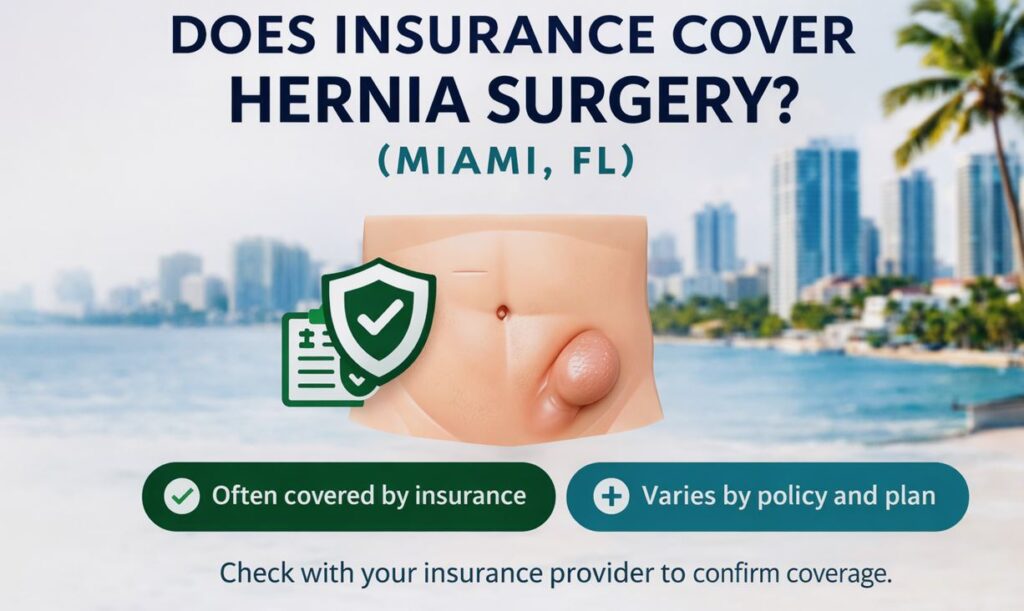
Struggling to decide when to get your hernia fixed because you are worried about the cost? Many patients across South Florida have questions about insurance coverage, out-of-pocket expenses, and self-pay options. At Miami Bariatric And Plastic Surgery MD, we break down everything you need to know about navigating insurance for your hernia repair—what’s covered, what’s required, and what you should expect from our dedicated administrative team.
✨ Hernia repair is considered a medically necessary procedure, not a cosmetic one.
✨ It is widely covered by Medicare, Medicaid, and private health insurance plans.
✨ We accept major networks including BCBS, UHC, Aetna, Cigna, and regional plans.
✨ Self-pay options and flexible financing are available for uninsured patients.
✨ Our clinic handles the entire prior authorization process for you.
Patients across South Florida, including Miami, Hollywood, Hialeah, Aventura, and Doral, often ask the same questions:
Let’s break down the facts about hernia surgery and your insurance coverage.
This is the most common question we hear.
In reality, a hernia is a physical, structural defect. It occurs when an internal organ or tissue pushes through a weak spot in your muscle. It will not heal on its own.
Because an untreated hernia can lead to life-threatening emergencies (like a strangulated bowel), health insurance companies universally classify hernia surgery as medically necessary.
“A hernia isn’t just a cosmetic issue; it’s a functional medical problem,” says Dr. Sergey Terushkin, MD, FACS. “Repairing it early prevents severe complications down the road, which is exactly why insurance covers it.”
We work hard to maximize your benefits and minimize your stress.
While network participation can vary based on your specific policy, we proudly accept a wide variety of major health insurance plans, including:
👉 In clinical practice, our administrative team will verify your exact benefits before your consultation so there are no financial surprises.
Learn more about Minimally Invasive Hernia Repair in Miami
Even though hernia surgery is covered, your insurance provider still requires proof.
To approve the surgery, they typically look for:
“Our goal is to make this seamless for the patient,” explains Dr. Terushkin. “We gather the clinical evidence and handle the insurance paperwork so you can focus on your recovery.”

Some patients assume they have to live in pain if they don’t have good insurance coverage. That’s not accurate.
If you are uninsured or have a high-deductible plan, we offer transparent, affordable self-pay pricing.
👉 When you choose our self-pay route, you receive a clear, upfront quote that covers the surgeon’s fee, the facility fee, and anesthesia—with no hidden costs.
Hernia surgery is medically appropriate for patients who:
At Miami Bariatric and Plastic Surgery, MD, patients from Miami Beach, Pembroke Pines, Coral Springs, and Plantation are evaluated individually to find the best surgical approach.
Many patients feel overwhelmed by the healthcare system before seeking help.
“Patients often come in frustrated by confusing insurance policies,” says Dr. Terushkin. “Our billing specialists step in to handle the heavy lifting, giving patients a structured, stress-free path to surgery.”
Hernia surgery is:
✔ Medically necessary
✔ Covered by most major health insurances
✔ Crucial for preventing life-threatening emergencies
But most importantly:
👉 You shouldn’t let confusing insurance policies keep you in pain.
At Miami Bariatric and Plastic Surgery, MD, we offer expert, minimally invasive hernia repairs with comprehensive insurance and financing support.
📍 Serving: Miami, Hollywood, Hialeah, Miami Gardens, Aventura, Doral, Coral Springs, Miramar, Pembroke Pines, Plantation, Davie, North Miami, and Miami Beach.
📞 Call: (786) 294-6054

Yes. Most insurance plans cover minimally invasive approaches (laparoscopic or robotic) because they result in fewer complications and a faster recovery compared to open surgery.
Yes. Whether your hernia is umbilical, inguinal, ventral, or incisional, it is considered a medical defect and is typically covered by insurance.
This depends on your specific plan. HMO plans usually require a referral, while PPO plans typically allow you to book a consultation directly with a specialist like Dr. Terushkin.
Absolutely. Hernia repair is a qualifying medical expense, meaning you can use the pre-tax funds in your Health Savings Account (HSA) or Flexible Spending Account (FSA) for out-of-pocket costs.
Still have questions? Below are additional answers covering more specific details about hernia surgery and insurance.
Disclaimer: Hernia surgery requires medical evaluation and supervision. Insurance coverage depends on medical necessity and individual plan guidelines. Results vary, and this information is for educational purposes only. Always consult a licensed, board-certified surgeon to determine candidacy and treatment options.
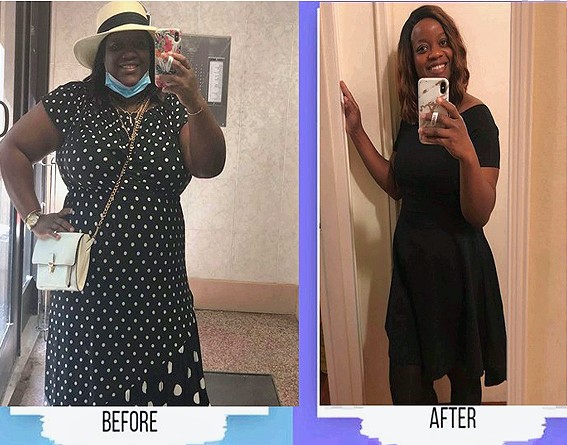
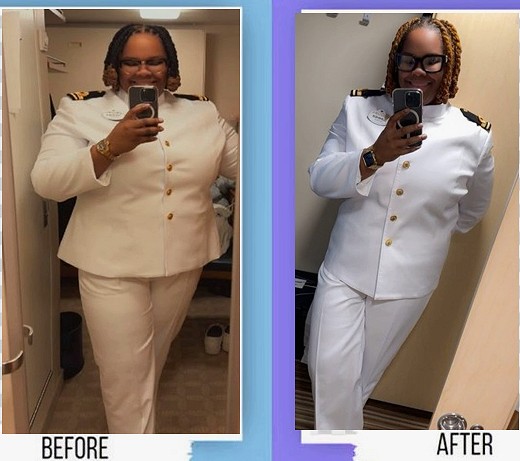
Real people, REAL RESULTS! Check out a few of the many people that we have helped reach their ideal weight goals over the years.